Digital marketing agency based in Niagara RegionOntario, CanadaAccepting Projects
SEO & AI Search Optimization
Technical SEO Services
Your website can have strong content, useful services and a professional design but still struggle in Google if search engines cannot properly find, understand or index its important pages.
Fix the Technical Problems Holding Back Your Search Visibility
Goodfaith’s Technical SEO services identify the website problems that can limit organic visibility and prioritize the fixes that matter most.
The goal is not to achieve a perfect score in an SEO audit tool.
It is to remove technical barriers so your important pages have a stronger foundation to compete in search.
We review areas such as:
Crawling
Indexing
Website Structure
Redirects
Performance
Validation
How it all
connects
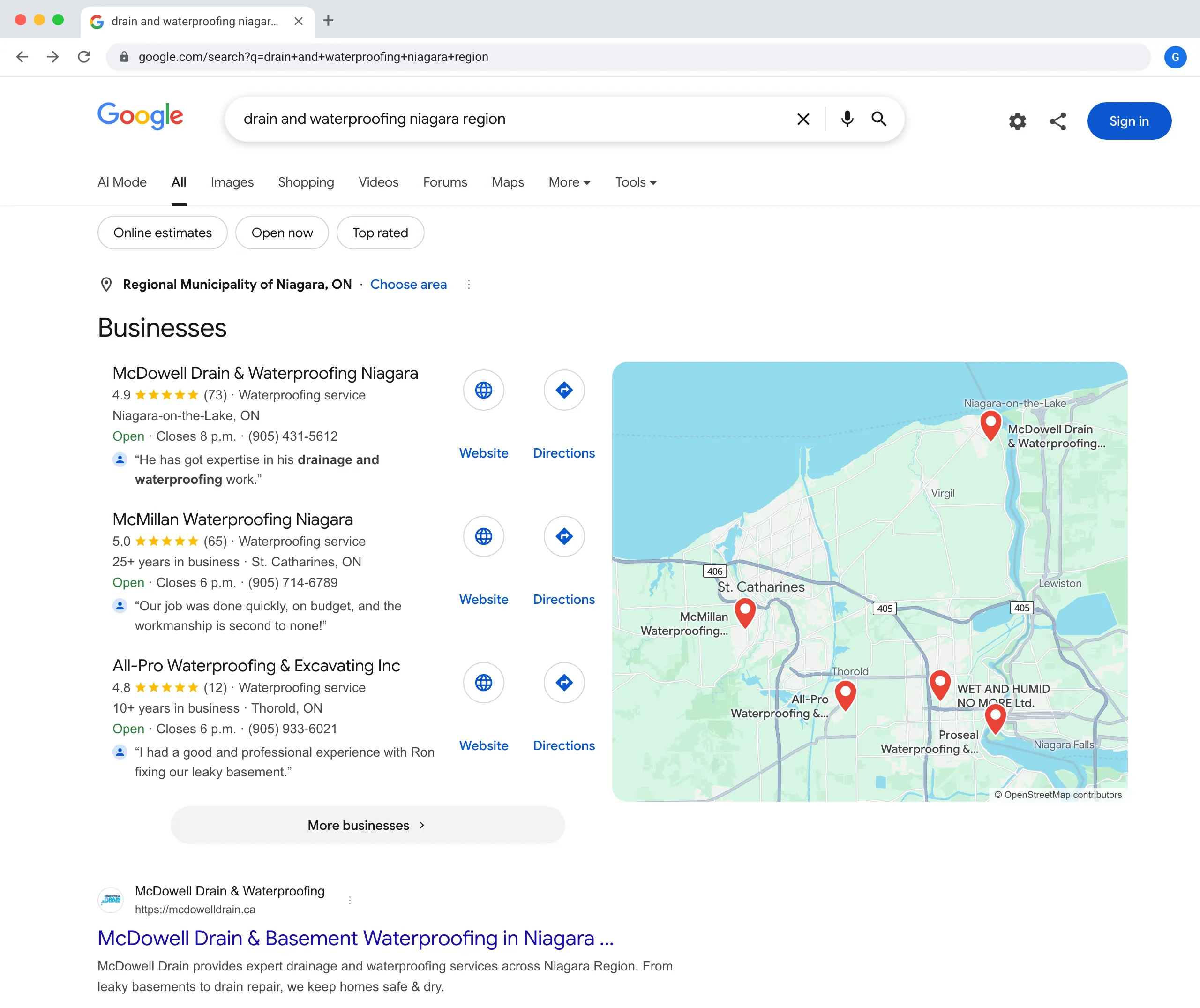
Goodfaith client: #1 in Businesses#1 in web results
9:41
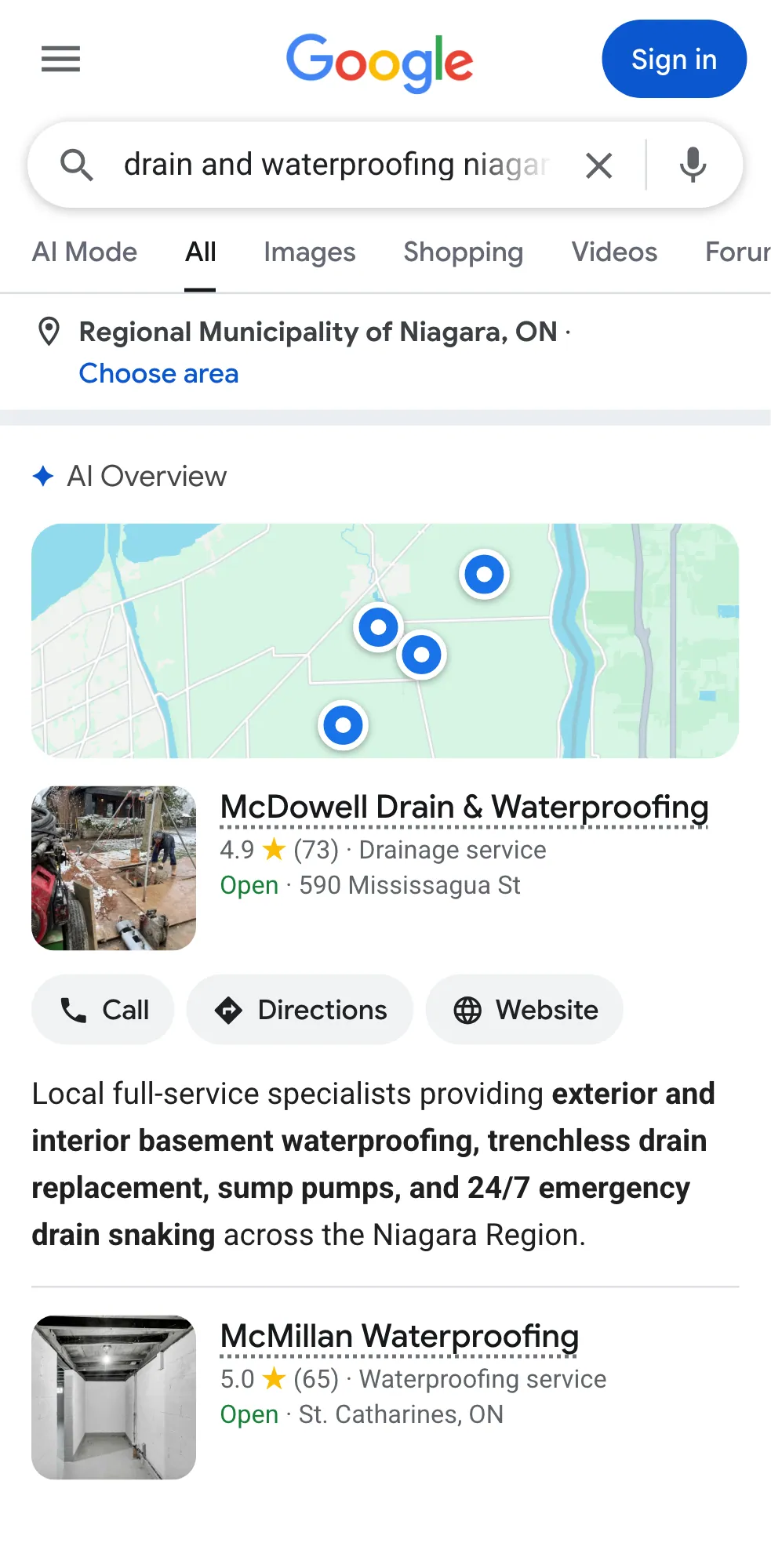
Goodfaith client: first in AI Overview
Rebuilt from a live Google search, November 2026
Our client, our work
McDowell Drain & Waterproofing is a Goodfaith SEO client
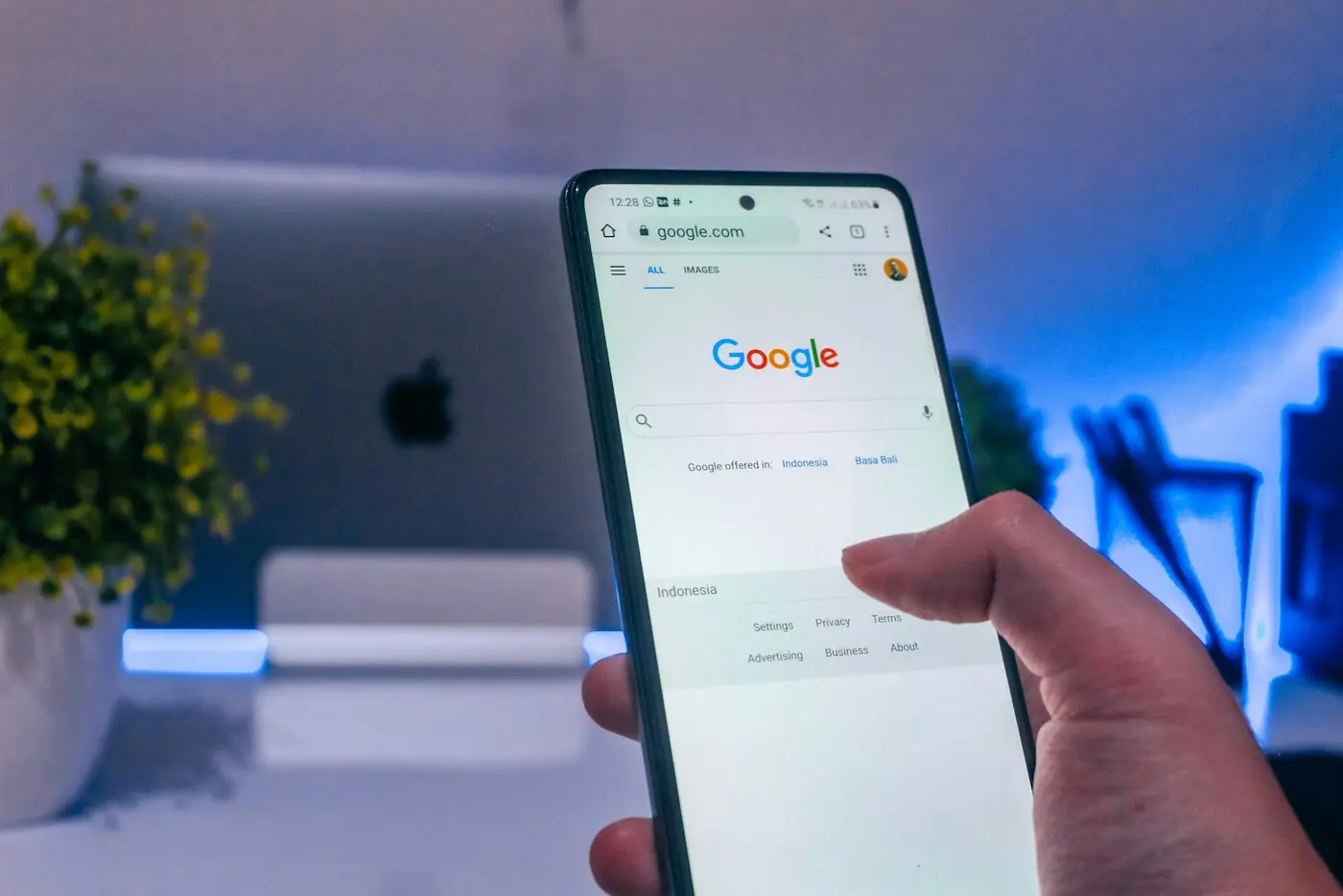
We handle the SEO behind this result. Search “drain and waterproofing niagara region” and McDowell comes first in Google’s Businesses list and first in the web results, and the AI Overview on a phone names them first.
For example, you may have an excellent service page, but it will have limited value if:
Google cannot discover it
It has accidentally been set to noindex
Another URL is being treated as the main version
Important internal links are broken
A redirect sends users and search engines somewhere incorrectly
The page relies on technology that makes important content difficult to access
A website redesign removed or changed valuable URLs
Technical SEO helps identify and correct problems like these.
It creates the conditions for your content and wider SEO strategy to work properly.
How Do I Know If My Website Has Technical SEO Problems?
Technical issues are not always obvious to customers.
A website can look completely normal while search engines encounter problems behind the scenes.
Warning signs can include:
Important pages missing from Google
Sudden visibility loss after a redesign
Search Console indexing errors
Duplicate versions of pages
Broken pages or links
Incorrect redirects
Very slow pages
Important pages buried deep in the website
Old URLs continuing to appear in search
New pages taking unusually long to be discovered
Unexpected pages appearing in Google
Goodfaith investigates why the issue is happening before recommending the fix.
What Is Included in Our Technical SEO Services?
01
Crawlability & Indexing Review
The first question is simple:
Can search engines reach and index the pages that matter?
We may review:
Robots.txt
noindex directives
XML sitemaps
HTTP status codes
Broken links
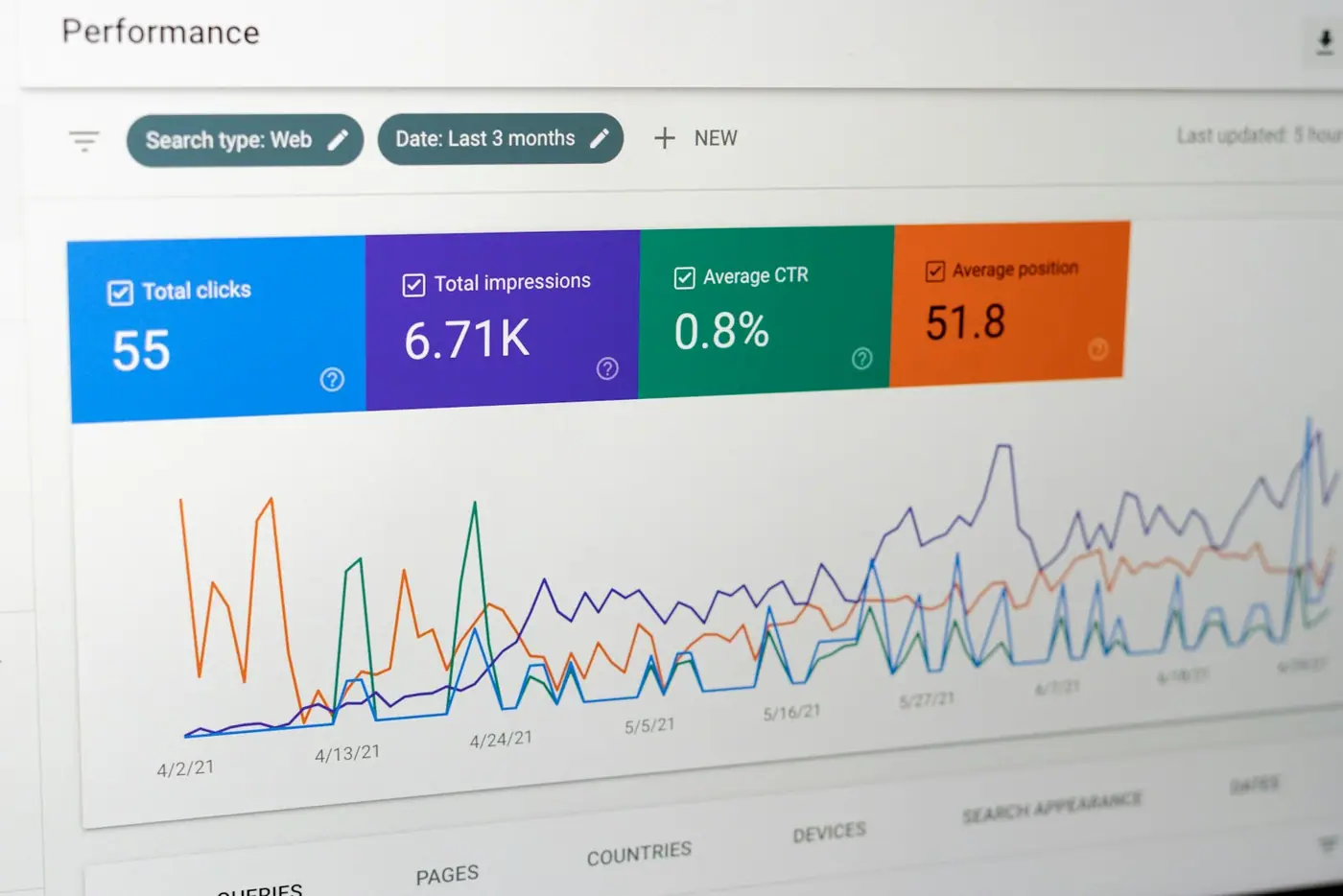
Search Console indexing information
Important pages missing from search
Unnecessary pages being indexed
Our goal is not to get every URL indexed.
We want the right pages indexed.
02
Website Architecture & Internal Discovery
Important pages should not be hidden inside a complicated website structure.
We review how customers and search engines move between:
Main navigation
Service pages
Location pages
Supporting content
Category pages
Blog articles
We can identify:
Orphan pages
Weak internal-link paths
Pages buried too deeply
Important services receiving little internal support
Technical SEO should make your most valuable pages easy to discover naturally.
03
Canonicals, Redirects & Duplicate URLs
Websites can sometimes create multiple URLs containing the same or very similar information.
We review areas such as:
Canonical tags
HTTP and HTTPS versions
WWW and non-WWW versions
Redirect chains
Broken redirects
Legacy URLs
Parameter URLs
Duplicate pages
The objective is to make it clearer which URL should represent the content.
Your internal links, redirects, sitemap and canonical signals should not be telling different stories.
04
JavaScript & Rendering Review
Modern websites often use JavaScript to create interactive experiences.
That is not automatically a problem.
Problems can arise when important:
Text
Navigation
Links
Service information
Page elements
depend on an implementation that makes them harder for search engines to process reliably.
Goodfaith reviews whether important content remains accessible and whether a simpler implementation could achieve the same customer experience.
Technology should improve the website—not make important information harder to find.
05
Website Performance & Core Web Vitals
A slow or unstable website can frustrate customers.
We may review:
Large images
Heavy scripts
Loading behaviour
Mobile performance
Layout movement
Responsiveness
Unnecessary page weight
But performance is considered in context.
If an important service page is completely missing from Google's index, fixing that usually deserves attention before chasing a small improvement in a performance score.
06
Structured Data & Technical Validation
Structured data can help search engines understand certain types of information when the markup is appropriate and accurately reflects the page.
We can review:
Existing structured data
Errors or warnings
Relevant schema implementation
Rich Results eligibility where applicable
After technical changes are implemented, we also validate whether they actually worked.
Depending on the issue, this may involve:
Google Search Console
URL Inspection
Crawl testing
PageSpeed Insights
HTTP response checks
Structured-data testing
Our workflow is:
Identify
Fix
Validate
Monitor
07
Technical SEO for Website Redesigns & Migrations
A website redesign can accidentally damage existing search visibility if technical SEO is ignored.
Changing URLs, navigation and website structure at the same time can create problems such as:
Missing redirects
Broken internal links
Lost pages
Incorrect canonicals
Staging noindex settings remaining live
Outdated XML sitemaps
Valuable pages disappearing
Goodfaith can help with:
Existing URL review
URL mapping
Redirect planning
Internal-link updates
Sitemap review
Canonical checks
Pre-launch testing
Post-launch monitoring
SEO migration planning should happen before the new website launches—not after rankings disappear.
The Goodfaith Technical SEO Framework
We simplify technical SEO into five questions:
1A
Access
Can search engines reach the page?
2I
Index
Can the correct page appear in search?
3C
Consolidate
Are redirects, canonicals and duplicate URLs pointing in the right direction?
4E
Experience
Does the website perform properly for customers across devices?
5V
Validate
Did the implemented fix actually solve the problem?
This gives us a practical rule:
Blockers Before Boosters
A technical audit can produce hundreds of warnings.
They are not all equally important.
Goodfaith generally prioritizes:
01Crawl blockers
Can Google reach important pages?
02Indexing blockers
Can those pages appear in search?
03Conflicting signals
Are redirects, duplicates or canonicals creating confusion?
04Discovery problems
Are important pages poorly connected?
05Performance issues
Is technical performance creating meaningful customer friction?
06Enhancements — Are there useful improvements that can be made after the major problems are resolved?
We focus first on issues that can affect important pages and business opportunities.
Technical SEO & AI Search Readiness
Technical SEO also supports modern AI-powered search experiences. Goodfaith does not recommend a separate technical website built specifically for AI search. The same important foundations remain:
Crawlable pages
Indexable content
Clear internal links
Important information available on the page
Low unnecessary duplication
Strong website performance
Accurate structured data where appropriate
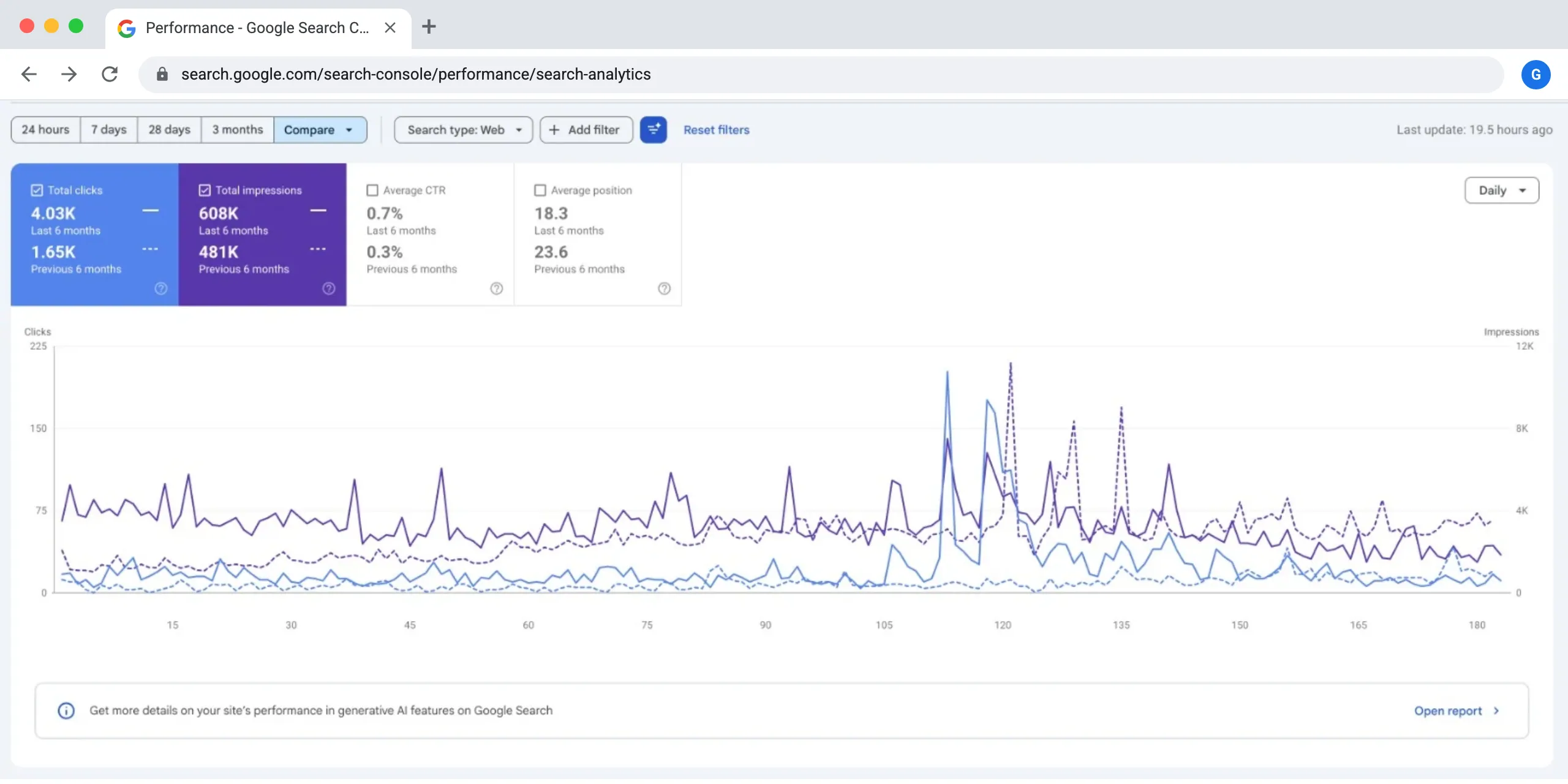
Our own applied research reached a similar conclusion: improvements in AI-search visibility happened during the broader SEO implementation without using a separate AI-only technical system.
Strong technical SEO remains part of strong modern SEO.
Industries We Help With Technical SEO
Technical SEO can support:
Service Businesses
Healthcare & Professional Services
Home Services
SaaS & Technology
Ecommerce
Multi-Location Businesses
Real Estate
B2B Companies
Large Content Websites
Businesses Redesigning or Migrating Websites
The technical priorities change depending on the size, technology and purpose of the website.
Why Choose Goodfaith for Technical SEO?
Typical Technical SEO Approach
Goodfaith Approach
Report every crawler warning
Prioritize business-impacting issues
Chase perfect audit scores
Focus on search accessibility
Treat every issue equally
Blockers before boosters
Fix technical SEO in isolation
Connect it with content and authority
Send recommendations only
Validate important fixes
Focus only on website speed
Review the complete technical foundation
Use technical jargon
Explain what the issue means for the business
Technical SEO should produce better decisions—not simply longer audit reports.
Fix the Technical SEO Problems That Actually Matter
Publishing more content or building more backlinks is not always the first answer.
Sometimes the website itself is creating the barrier.
Goodfaith identifies what is technically limiting your important pages, what should be fixed first and whether the solution actually worked.
Fix the foundation. Remove the barriers. Give important pages a stronger opportunity to compete.
It can remove problems preventing pages from being properly discovered or indexed, but rankings also depend on content, relevance, authority, competition and search intent.
Is Website Speed Part of Technical SEO?
Yes, but Technical SEO also includes crawling, indexing, redirects, canonicals, website architecture, JavaScript, structured data and migrations.
Do Small Websites Need Technical SEO?
Yes. Even a small website can have serious issues such as noindex settings, broken redirects, incorrect canonicals or important pages that are difficult to discover.
Do You Support Website Migrations?
Yes. Technical migration support can include URL mapping, redirect planning, sitemap review, internal-link checks and post-launch monitoring.
We tested whether local businesses that rank near the top of Google are also the ones AI search tools recommend. Here is how we ran the experiment and what we observed.
Lessons from hands-on SEO work in the Niagara waterproofing and drainage industry: local search, website architecture, multi-location entities, service pages vs articles and first-hand content.