Blog

Latest Article

Guides, original research, experiments and industry insights from our work on search, AI-assisted discovery and the businesses we support.

Experiments · 5 min read

Do Google’s Top-Ranking Local Businesses Also Get Recommended by AI? We Tested It

We tested whether local businesses that rank near the top of Google are also the ones AI search tools recommend. Here is how we ran the experiment and what we observed.
Lovish Tayal
Founder & CEO, Goodfaith Branding & Digital Marketing

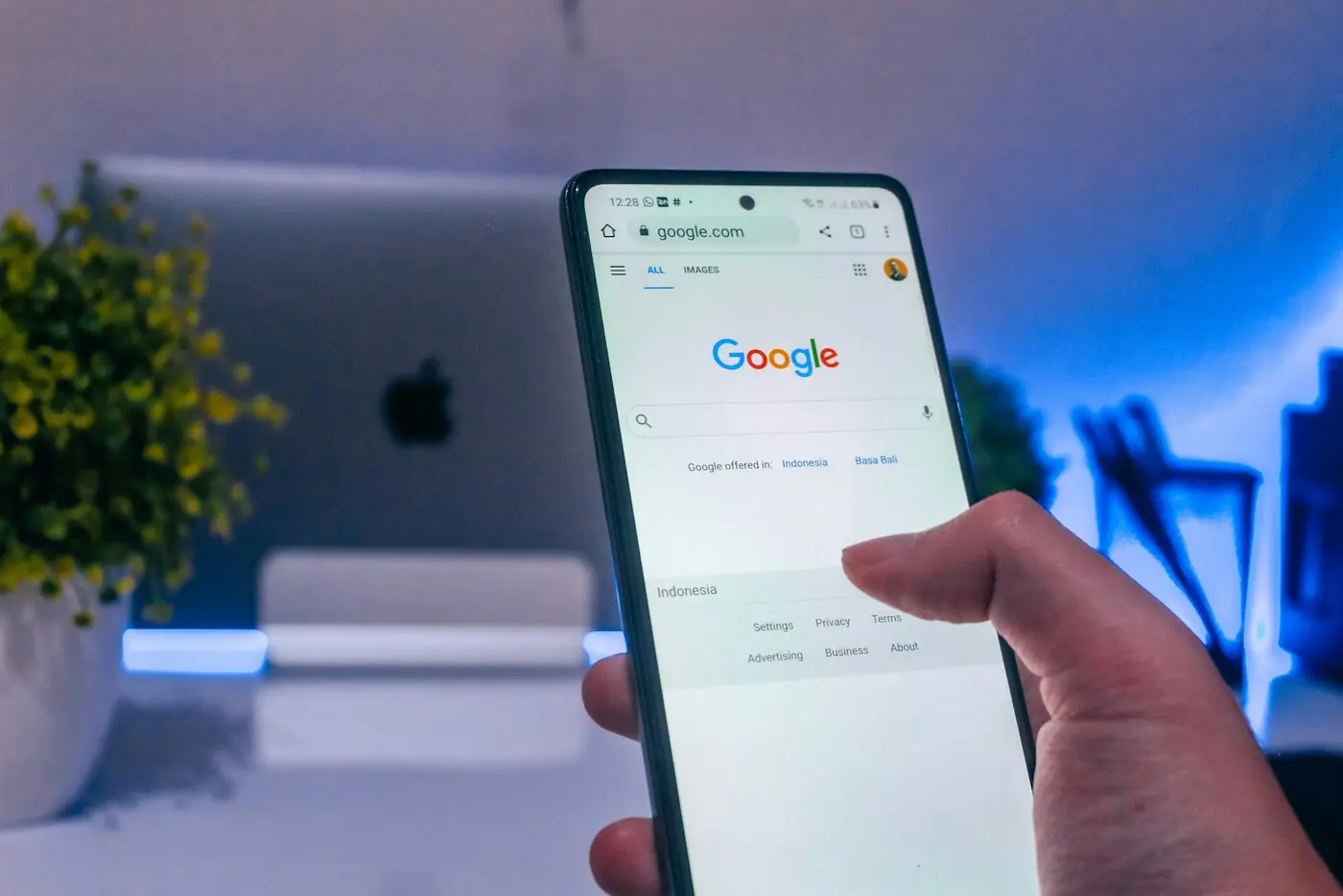
Hand holding a phone with Google open

Ranking near the top of Google has traditionally been one of the biggest goals of local SEO. But customers are no longer discovering businesses through Google’s traditional search results alone.

They can now ask AI-powered search tools questions such as:

“What are the best digital marketing agencies in Niagara?”

That raised an interesting question for us at Goodfaith:

If a business performs well in traditional Google Search, does that automatically mean it will also be surfaced when AI systems recommend local businesses?

We ran an exploratory test using digital marketing agencies in Niagara Region to better understand the relationship between traditional search visibility and AI-driven discovery.

Here’s what we learned.

How We Conducted the Experiment

We tested variations of commercially relevant searches around digital marketing services in Niagara Region, including searches related to:

  • Digital marketing agencies in Niagara
  • SEO companies in Niagara
  • Digital marketing agencies in Niagara Falls
  • SEO companies in St. Catharines
  • Local digital marketing services
  • Web design and SEO providers

We then compared the types of businesses appearing prominently in traditional search with the signals that can make businesses easier for AI-powered systems to discover and understand.

This wasn't intended to reverse-engineer either Google or an AI platform.

It was designed to answer a simpler question:

Does strong traditional search visibility tell the whole story anymore?

Our observation was: not necessarily.

Finding #1: Google Visibility and AI Visibility Are Not the Same Thing

The first important observation was that traditional search and AI recommendations shouldn't be treated as identical discovery systems.

Google's conventional results generally provide a ranked selection of pages that match the query.

An AI recommendation has a different task.

If someone asks:

“Which digital marketing agencies should I consider in Niagara?”

the system may need to identify businesses, understand what each offers and gather enough information to formulate a useful recommendation.

This means being discoverable is only part of the challenge.

The business also needs to be understandable.

A company can have a locally optimized landing page, but that alone doesn't necessarily establish everything an AI system might want to understand about its services, reputation, expertise and relevance.

Finding #2: Strong Businesses Leave Signals Beyond Their Homepage

One pattern became particularly interesting when examining businesses with established search visibility.

Their presence often wasn't limited to one homepage.

Search results could reveal combinations of:

service pages, location pages, reviews, business profiles, case studies, third-party references and other branded results.

This matters because someone researching a company rarely relies on one source.

AI systems can also encounter information about businesses across the wider web.

This led to one of the main lessons from our experiment:

Your website tells search systems who you say you are. Your wider digital footprint can help corroborate that story.

For local businesses, that makes reputation and entity consistency increasingly important.

Finding #3: Reviews Matter, But They Aren’t the Entire Strategy

Reviews are clearly important for local businesses.

A strong review profile can help potential customers decide whether a company deserves their trust, and Google itself considers review signals as part of local prominence.

But our analysis suggests businesses shouldn't interpret that as:

More reviews = automatic AI visibility.

AI recommendation queries can involve broader information.

What services does the company provide?

Where does it operate?

Does its website demonstrate expertise?

Is the business mentioned elsewhere?

Are there independent sources discussing it?

Can the system confidently distinguish the business from similarly named companies?

Reviews are one component of that picture rather than the entire picture.

Finding #4: Clear Service and Location Relationships Matter

Another noticeable difference between businesses was how clearly they communicated the relationship between their services and locations.

Consider the difference between a website that simply says:

“We provide digital marketing.”

and one that clearly establishes:

  1. Business
  2. Digital Marketing Agency
  3. SEO
  4. Local SEO
  5. Web Design
  6. Niagara Region

The second creates much clearer relationships.

This is where traditional SEO and AI Search Optimization begin to overlap.

Good website architecture, descriptive service pages, consistent business information, relevant location signals and structured information can make a business easier to understand.

These practices aren't exclusively “AI SEO.”

They're good search fundamentals that may become even more useful as discovery becomes more conversational.

Finding #5: Third-Party Visibility Deserves More Attention

One of the biggest lessons from this experiment wasn't about something businesses should add to their own websites.

It was about what happens outside them.

Search results around agencies can include company websites alongside directories, review platforms, business profiles and editorial lists.

That creates an important question for AI visibility:

What does the wider web say about the business?

For years, SEO strategies have often viewed third-party websites primarily as backlink opportunities.

AI-driven discovery gives us another reason to think about them.

A legitimate profile, local media mention, industry directory listing, expert contribution or independent review can potentially provide another source connecting:

Brand + service + location + expertise.

That doesn't mean businesses should chase hundreds of low-quality citations.

It means credible third-party presence deserves to be considered part of modern search visibility.

So, Does Ranking on Google Mean You'll Be Recommended by AI?

Based on this exploratory test, we wouldn't make that assumption.

Strong traditional SEO provides an important foundation. A technically sound website, useful content, service relevance, local authority and backlinks still matter.

But AI recommendation visibility introduces another layer.

Businesses increasingly need to think about three connected questions:

Can search systems find us?

That's traditional SEO and technical discoverability.

Can they understand us?

That's content, website structure, entity clarity and topical relevance.

Can they find evidence beyond our own claims?

That's where reviews, reputation, third-party mentions, citations and broader brand authority become interesting.

What Should Local Businesses Do?

Our experiment suggests businesses shouldn't abandon SEO to chase the newest AI optimization trend.

The better strategy is to expand what SEO means.

Build strong service pages.

Keep Google Business Profile information accurate.

Create genuinely useful content.

Publish first-hand experience and original information where possible.

Earn real reviews.

Build relevant third-party mentions.

Keep business, service and location information consistent.

And monitor how your brand appears not only in Google Search, but also across AI-powered discovery.

The goal is no longer simply:

“Rank #1 for this keyword.”

A stronger long-term objective is:

Become a business that search engines and AI systems can consistently find, understand and verify.

That is where traditional SEO, Local SEO, AIO, AEO and GEO increasingly meet.

About This Experiment

  • Market Studied — Niagara Region, Ontario
  • Industry — Digital Marketing
  • Search Types — Local commercial and service-based searches
  • Focus — Google visibility vs. AI-powered business discovery
  • Study Period — August 2026

This was an exploratory Goodfaith study intended to identify patterns worth testing at a larger scale. It does not claim that any individual factor causes Google rankings or AI recommendations.

Industry Insights · 6 min read

What We Learned Working on SEO for a Niagara Waterproofing Company

Lessons from hands-on SEO work in the Niagara waterproofing and drainage industry: local search, website architecture, multi-location entities, service pages vs articles and first-hand content.

Lovish Tayal
Founder & CEO, Goodfaith Branding & Digital Marketing

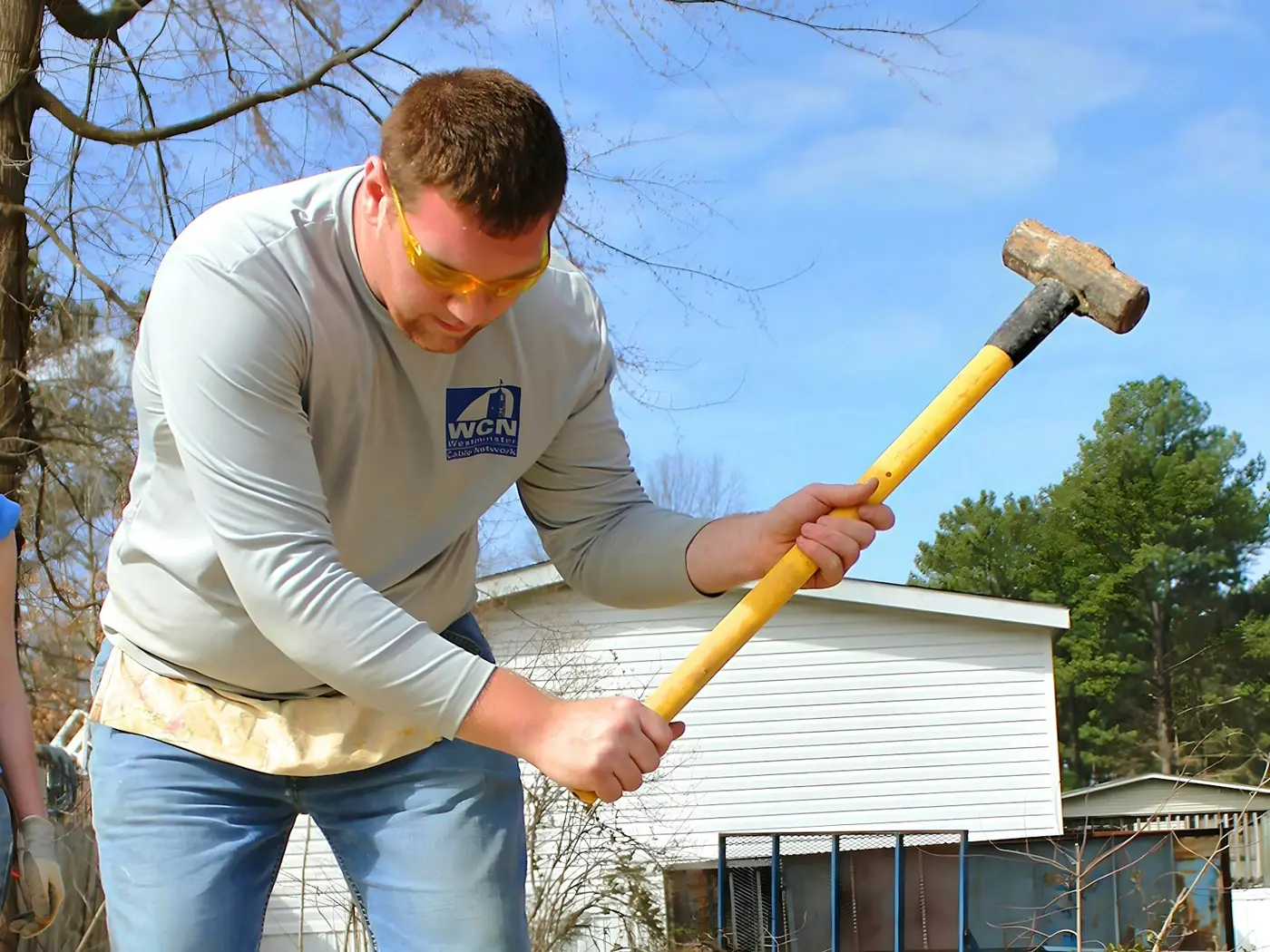
Contractor swinging a sledgehammer on site

Waterproofing SEO looks simple from the outside. A homeowner has water in the basement, searches for a waterproofing company, compares a few contractors and makes a call.

In practice, the search journey is much more complicated.

Through our hands-on SEO work in the waterproofing and drainage industry in Niagara Region, we have seen how technical website problems, local search competition, service-area targeting, content quality and website structure can all affect organic visibility.

This Industry Insight shares some of the problems we have encountered and the broader lessons waterproofing companies can take from them.

The examples are based on real industry experience, but client-specific information and confidential performance data have intentionally been excluded.

1. Waterproofing SEO Is Extremely Local

Someone dealing with a wet basement usually isn't searching for general information about waterproofing companies across Canada.

They are much more likely to search for something such as:

  • basement waterproofing near me
  • basement waterproofing Niagara Falls
  • wet basement repair St. Catharines
  • foundation crack repair Niagara
  • sump pump installation near me
  • basement leak repair Welland

This creates an interesting SEO challenge for contractors serving multiple municipalities.

A waterproofing company might physically operate from one or two locations while serving homeowners throughout an entire region.

Creating dozens of nearly identical city pages isn't necessarily the answer.

Instead, businesses need to establish clear regional relevance through their service pages, Google Business Profile, service-area information, locally useful content, customer reviews, internal linking and genuinely useful location content where sufficient local information exists.

The objective isn't to mention "Niagara" 50 times.

It is to demonstrate that the company actually operates within and understands the market.

2. Website Architecture Can Quietly Become an SEO Problem

One of the more interesting lessons from our waterproofing industry work has been how quickly a contractor website can become structurally complicated.

A company may offer:

  1. Basement Waterproofing
  2. Interior Waterproofing
  3. Exterior Waterproofing
  4. Foundation Repair
  5. Crack Repair
  6. Drainage
  7. Sump Pumps
  8. Backwater Valves

Then come locations, educational articles, project pages and other resources.

Eventually, navigation designed to make everything accessible can create hundreds of sitewide internal links.

More internal links aren't automatically better.

When nearly every page links to hundreds of other URLs through oversized menus and footers, important pages may receive less contextual emphasis.

We prefer a clearer hierarchy.

Core services should be easily accessible globally, while related sub-services and educational resources can be connected through contextual internal links.

For example, an article explaining why water enters through a foundation crack naturally provides an opportunity to link to the relevant foundation crack repair service.

That link has context.

Website architecture should help both homeowners and search engines understand:

What does this company specialize in?

Which pages are most important?

How are these services related?

3. Two Real Locations Require More Than Two Addresses in a Footer

Multi-location businesses introduce another layer of complexity.

If a waterproofing company operates from two legitimate locations, its website needs to communicate that relationship clearly.

Simply placing two addresses across different templates can potentially create ambiguity about the business structure.

Each legitimate location should be represented consistently through appropriate website information, Google Business Profiles where eligible, contact details and structured data.

The broader lesson is simple:

Local SEO is also entity management.

Google shouldn't have to guess whether two addresses represent two businesses, an old address, a service area or two active locations belonging to the same company.

Consistency matters.

4. Service Pages and Educational Content Have Different Jobs

A common mistake in contractor SEO is expecting blog articles to rank for every valuable commercial search.

Consider:

Why is water coming through my basement wall?

That is primarily an informational problem.

Compare it with:

basement waterproofing company Niagara

That search has much stronger commercial intent.

The website should satisfy both without confusing their purposes.

A waterproofing service page should explain the service, problems it solves, methods used, relevant experience, service area and next step for the homeowner.

An educational article can explore a specific question much deeper.

The two should then support each other.

For example:

Article: Why Does My Basement Leak After Heavy Rain? → Service: Basement Waterproofing → Related service: Foundation Crack Repair → Conversion: Request an Inspection

That creates a content journey rather than a collection of disconnected pages.

5. Waterproofing Companies Need Content Competitors Can't Easily Copy

There are thousands of articles online explaining the "signs of a wet basement."

Publishing another version doesn't automatically create meaningful value.

The bigger opportunity is first-hand industry content.

Waterproofing businesses encounter real situations every week:

A basement leaks only after prolonged rain.

A window well repeatedly fills with water.

An old drainage system is partially obstructed.

A foundation crack appears harmless until seasonal conditions change.

A homeowner doesn't know whether the problem requires interior waterproofing, exterior excavation or a smaller repair.

Those experiences can become extremely useful content.

Instead of writing:

"5 Benefits of Basement Waterproofing"

a contractor could publish:

"Why Did This Basement Leak Only After Two Days of Heavy Rain?"

The article can explain the symptoms, diagnostic process, possible causes and repair considerations without turning the page into an advertisement.

This is the kind of experience-driven content that can differentiate a contractor from websites publishing generic summaries.

6. Google Maps and Organic SEO Need to Work Together

For waterproofing companies, ranking organically is only part of the opportunity.

Emergency and high-intent local searches frequently make Google Business Profile visibility particularly important.

That means the website and local presence should reinforce each other.

Important signals include:

  • Accurate business information
  • Correct primary and secondary categories
  • Clearly defined services
  • Genuine customer reviews
  • Consistent location information
  • Relevant website landing pages
  • Strong local reputation
  • Quality photographs and business information

Reviews are particularly valuable because they don't only influence rankings.

They influence people.

A homeowner choosing between three waterproofing contractors may care less about which company has the cleverest meta description and more about whether previous homeowners describe similar problems and positive experiences.

SEO gets the company discovered.

Trust helps turn that discovery into a lead.

7. AI Search Is Becoming Another Discovery Layer

The homeowner journey is also changing.

People can now ask Google AI experiences, ChatGPT and other AI-powered systems questions such as:

Who are reputable basement waterproofing companies in Niagara?

or:

What type of contractor should I call if my basement leaks only during heavy rain?

This doesn't mean traditional SEO is disappearing.

It means businesses should think beyond individual keywords.

Clear service information, expert explanations, recognizable business entities, third-party mentions, genuine reviews, original experience and strong topical coverage can all help establish what a company is known for.

For waterproofing businesses, the future isn't SEO versus AI SEO.

It is building enough real-world and digital evidence that search engines, AI systems and homeowners can understand the same thing:

Who you are, where you operate, what problems you solve and why your business should be considered.

What Waterproofing Companies Can Learn From This

Our work in this industry has reinforced one central lesson:

Waterproofing SEO is not about creating the largest website. It is about creating the clearest and most trustworthy digital representation of the business.

Technical SEO matters.

Website architecture matters.

Local search matters.

Content matters.

Reviews matter.

Increasingly, AI search visibility matters too.

But these shouldn't operate as separate marketing projects.

The strongest strategy connects them.

A useful article supports a service page. The service page reinforces the company's expertise. Local information supports geographic relevance. Reviews provide independent evidence. Strong website architecture helps search engines understand the relationship between everything.

That is how a waterproofing website becomes more than an online brochure.

It becomes a searchable representation of the company's actual expertise.

About Goodfaith

Goodfaith studies how traditional search, local search and AI-powered discovery are changing the way customers find businesses. Our Industry Insights combine hands-on marketing experience with research and experimentation to identify practical opportunities businesses can use to strengthen their digital visibility.

How the blog is organised

Four kinds of articles

  1. 01

    Insights & Guides

    Normal SEO-focused educational blogs

    Example“How Much Does SEO Cost in Canada?”

  2. 02

    Research

    Original Goodfaith studies using collected data

    Example“We Analyzed 100 Niagara Business Websites”

  3. 03

    Experiments

    Things Goodfaith actually tests and measures

    Example“We Tested AI SEO vs Traditional SEO for 90 Days”

  4. 04

    Industry Insights

    Marketing analysis for specific industries

    Example“What We Found Analyzing 50 Contractor Websites”

Let’s Talk

Follow us

What we offer

  • SEO & AI Search Optimization
  • Local SEO
  • Google Business Profile
  • Website Design
  • Web Development
  • Branding & Visual Identity
  • Social Media
  • Content Marketing

Office

Niagara Region, Ontario
Canada

Not Sure Which Digital Marketing Service Your Business Needs?

You don't need to decide whether you need SEO, Local SEO, website redesign, CRO, branding or AI Search Optimization before speaking with us.

Tell us what you are seeing:

We can start by identifying where the strongest opportunity exists.

Find the constraint. Fix the right problem. Build the system around growth.

Contact us